Saturday, 7 November 2026 - 16:49

About us

Gulf Mag is the first digital platform connecting the Gulf and North Africa for effective communication. We keep you up-to-date with the latest news, analysis, insights, and opportunities to connect markets, ideas, and people, and facilitate communication between entrepreneurs, communities, and influencers.


Discover our culture (customs and traditions)

The caftan reignites debate: Moroccan or Algerian?

Where did it really come from? And why do Morocco and Algeria insist it's part of their identity?
Discover our culture (customs and traditions)

The caftan reignites debate: Moroccan or Algerian?

Where did it really come from? And why do Morocco and Algeria insist it's part of their identity?
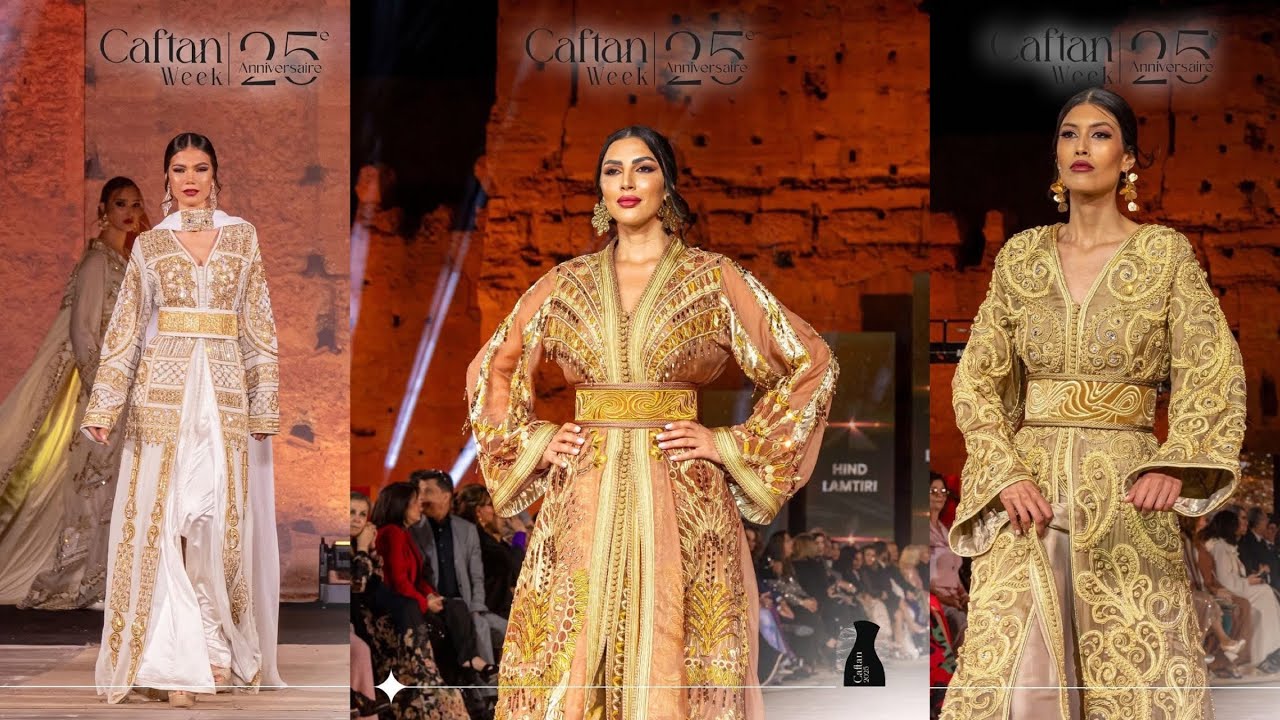
In recent years, the caftan has transformed from a luxurious traditional garment into a sensitive issue touching on national identity and cultural history in Morocco and Algeria, especially after repeated battles within UNESCO and social media wars over who truly owns the caftan.

What is the historical origin of the caftan?

The word "caftan" itself has ancient Persian and Turkish origins and spread through the Islamic empires to the Arab world and North Africa.

Historians believe the caftan became widespread during the Ottoman era, where it was a luxurious garment worn by the elite and sultans in various parts of the Middle East and North Africa.

However, over the centuries, the caftan ceased to be a uniform garment and evolved locally within each region, acquiring different designs, fabrics, and embellishments according to local culture.

Why does Morocco consider it an authentic Moroccan heritage? In Morocco, the caftan is considered one of the most prominent symbols of national identity, especially since Morocco has developed its own distinct version of the caftan over the centuries, clearly different from the original Ottoman models.

Moroccans emphasize several points:

• The Moroccan caftan has been documented for centuries within the Moroccan royal court, particularly in cities like Fez and Marrakech.

• Moroccan schools of embroidery and tailoring have developed specifically for the caftan, such as the Fassi style and the takchita.

• The Moroccan caftan has become an industry in its own right, showcased internationally at fashion weeks.

• Morocco has registered some of its traditional elements associated with the caftan with UNESCO as part of its cultural heritage.

Rabat believes that what distinguishes the Moroccan caftan is not only its style, but also the long accumulation of craftsmanship and artistry that has made it a distinct Moroccan identity.

Why does Algeria also claim it as Algerian heritage?

In Algeria, many consider the caftan and other embroidered traditional clothing to be part of Algeria's historical heritage, especially in western Algeria and cities like Tlemcen and Oran. Algerians base their argument on several factors: the existence of traditional garments similar to the caftan for centuries in Algeria; the region's exposure to the same Andalusian and Ottoman cultures that influenced Morocco; the presence of a long-established tradition of embroidery and craftsmanship in Algeria; and the historical perception of Maghrebi heritage as a shared space predating modern borders.

Some in Algeria also believe that Morocco has "monopolized" the global marketing of the caftan, while older Algerian styles have not achieved the same international recognition.

Is the caftan Moroccan or Algerian?

The historical truth is more complex than the political debate.

The caftan, as a concept and a garment, is not a purely Moroccan or Algerian invention, but rather an ancient Eastern garment that has been passed down through multiple civilizations.

However, the current Moroccan version of the caftan is considered the most internationally renowned and the most documented as Moroccan heritage within international cultural institutions.

Conversely, Algeria also possesses traditional garments very similar to the caftan, with shared Andalusian, Ottoman, and Maghrebi roots. Therefore, a number of researchers believe that the real debate is not about "who invented the caftan first," but rather about: who developed it further? Who internationally recognized it? And who succeeded in transforming it into a global soft power?

Why has the issue become so sensitive?

Because heritage today is no longer just history, but also an economic asset, an identity, and an international image. The caftan generates millions of dollars from the fashion industry and tourism. It represents a cultural symbol at weddings and other celebrations.

It is also used in cultural diplomacy and international promotion. This is why any attempt to attribute it to another country becomes a matter of public opinion in Morocco and Algeria, especially given the ongoing political tension between the two countries.


Associated countries

  •     Algeria-الجزائر
  •      Morocco-المغرب
  •     

Posted comments