Saturday, 7 November 2026 - 16:49

About us

Gulf Mag is the first digital platform connecting the Gulf and North Africa for effective communication. We keep you up-to-date with the latest news, analysis, insights, and opportunities to connect markets, ideas, and people, and facilitate communication between entrepreneurs, communities, and influencers.


Business and Markets News

Morocco Introduces Digital Services Taxation Framework for Global Technology Companies

Morocco has launched a digital services taxation system requiring foreign technology companies providing online services in the country to register and report their digital revenues, as part of efforts to regulate the digital economy and ensure fair taxation.
Business and Markets News

Morocco Introduces Digital Services Taxation Framework for Global Technology Companies

Morocco has launched a digital services taxation system requiring foreign technology companies providing online services in the country to register and report their digital revenues, as part of efforts to regulate the digital economy and ensure fair taxation.


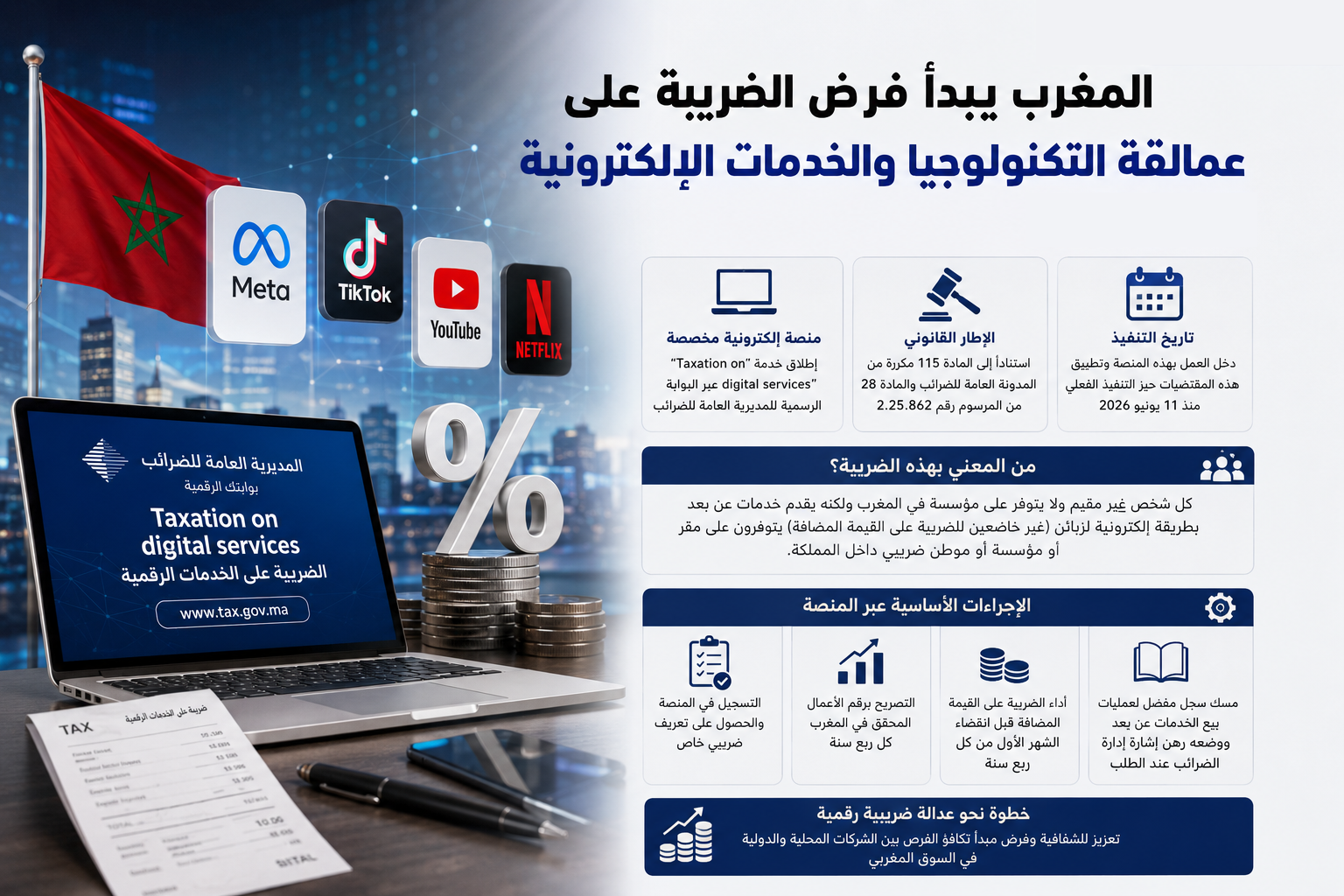
Morocco has started implementing a new taxation framework targeting digital services provided by global technology companies operating in the Moroccan market. The measure aims to adapt the country’s tax system to the rapid growth of the digital economy and ensure fair tax treatment between traditional businesses and international digital service providers.

The new rules apply to non-resident companies that do not have a permanent establishment in Morocco but provide electronic services remotely to customers located in the Kingdom. The measure concerns major digital platforms and technology companies offering online services, including global players in social media, digital entertainment, and online content distribution such as Meta, TikTok, Netflix, and YouTube.

To ensure the effective implementation of this system, Morocco’s General Directorate of Taxes, under the Ministry of Economy and Finance, launched a dedicated online platform called “Taxation on Digital Services”. The platform allows foreign digital service providers to register, obtain a specific tax identification number, and fulfill their tax reporting obligations. The new framework officially entered into force on June 11, 2026, based on amendments to Morocco’s General Tax Code and regulations governing value-added tax (VAT) on digital services.

Under the new requirements, concerned companies must declare their revenue generated from digital services provided in Morocco on a quarterly basis, report VAT-related transactions, and maintain detailed records of electronically executed digital service sales. These records must be made available to the tax administration whenever requested.

The introduction of digital taxation represents a significant step in Morocco’s strategy to regulate the digital economy, expand the tax base, and ensure that international technology companies contribute to public revenues in accordance with the same principles applied to other businesses operating in the country.

This reform also reflects Morocco’s alignment with global trends regarding the taxation of digital activities, as governments worldwide seek new mechanisms to address the growing influence of multinational technology companies in local markets.


Associated countries

  •     Morocco-المغرب
  •     

Posted comments